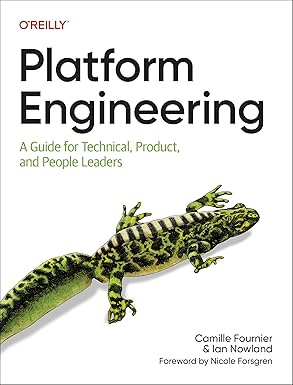
AI or not, as engineers we are constantly called to solve problems: technical challenges, product issues, and organizational complexities. A book that can truly help in this journey is Platform Engineering.
books
The Ai Con

For irony, yesterday I finished reading The AI Con, on the same day ChatGPT 5 was presented.
As the title says, the book talks about the cons of AI: environmental issues, exploitation of people, copyright, educational problems, political problems, and so on.
I understood that a book like this can feel anachronistic nowadays (especially for AI fanboys — not for the people who really study the topic and are actual experts, but they are few), but I still recommend reading it.
One advantage of the book compared to AI is that you can hear different perspectives.
A technical blog is not a waste of time.
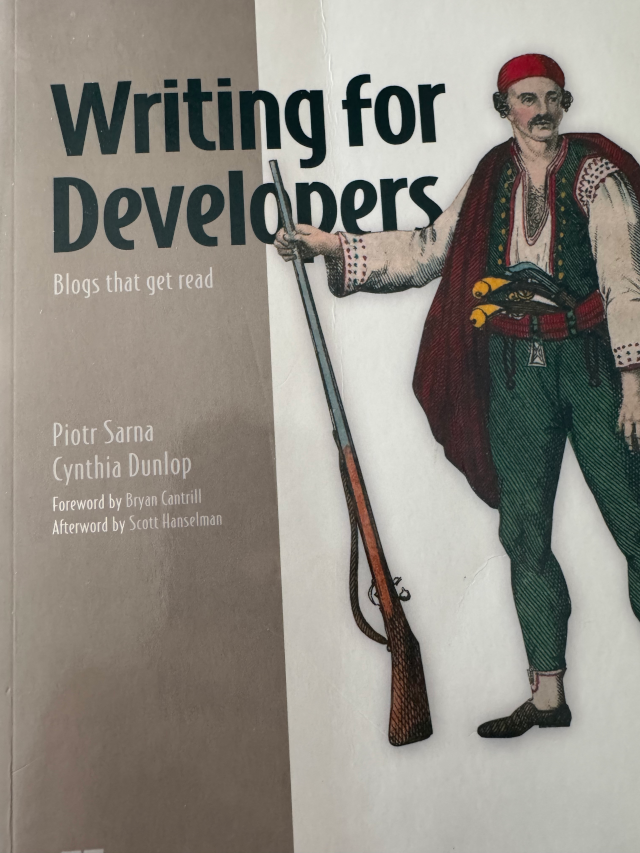
Often lately I thought (and maybe not only me) that maybe writing tech blog posts or newsletters is not helpful anymore (I’m talking about posts that should have some value, not clickbait ones).
This book, one of the best tech books I’ve read this year, changed my mind and gave me back the enthusiasm to keep writing.
The authors explain how to write different types of posts, using theory and real examples.
They also give some suggestions on how to use AI to check mistakes in your posts, not just grammar, but also to investigate if the post is unclear, and so on.
But they clearly say: “don’t use AI to write the post” – it must be personal, your idea, your style.
It’s not easy nowadays, and that’s exactly why it’s more beautiful.
Bare-Metal Programming: A Great Book to Start with STM32
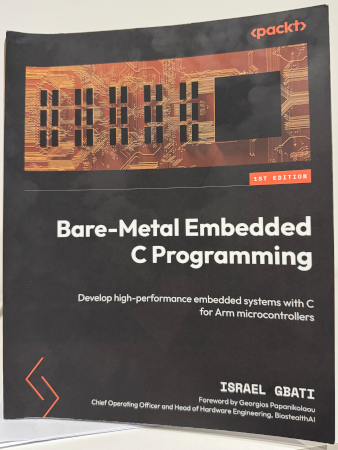
The last book I read dives into bare-metal programming, which means writing code that runs directly on the hardware, without an operating system. If you’re curious about embedded systems beyond platforms like Arduino or Raspberry Pi, this book is a great starting point.
The book is titled Bare-Metal Embedded C Programming, and it uses the NUCLEO-F411 development board, based on the STM32F411RE microcontroller. It’s a powerful yet affordable board ideal for learning low-level programming.
Who is this book for?
Both beginners and experienced developers will find it useful. It starts with setting up the development environment—installing the IDE, the toolchain, and the software required to upload code to the board.
Although the author works with Windows, I tried the examples on both Linux and macOS without issues.
What’s inside?
Each chapter includes:
- A theoretical introduction
- A practical coding section
This structure helps you understand the concepts before jumping into implementation.
What you’ll learn
Throughout the book, you’ll get hands-on experience with:
- ADC (Analog-to-Digital Converter)
- SPI (Serial Peripheral Interface)
- I2C (Inter-Integrated Circuit)
- And many other low-level features of STM32 microcontrollers
If you want to explore bare-metal embedded development and move beyond high-level platforms, this book is definitely worth reading.
Designing APIs With Swagger and OpenAPI
Do you read books in the field where you think you’re an expert or have years of experience?
I do it just to check if there’s something new in the topic or if I have some bad habits I need to fix.
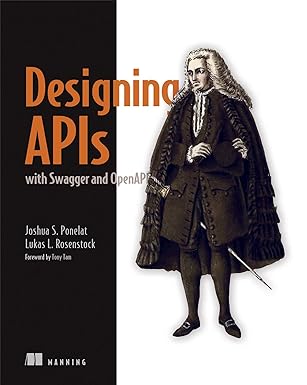
I just finished this book: Designing APIs with Swagger and OpenAPI (no affiliate link https://tinyurl.com/yxn9r8uw). I think it’s one of the best books on the topic — I highly recommend it to anyone who wants a refresher or is a junior developer.
In fact, you’ll learn how to:
- design APIs
- document APIs using the OpenAPI standard
- use query parameters
- implement pagination
- use JSON Schema
- test your APIs
I think this book is a great complement to Principles of Web API Design: Delivering Value with APIs and Microservices.
Reading both gives you a well-rounded perspective.