
This post is an update of a post that I wrote at the end of 2023. I’d like to share my experience with journaling and time management. I started eight years ago to improve my time management skills and stay focused. I’m not selling anything and don’t have a magic formula, but I hope my experience can help someone. As you may know, my interest lies in computer science; I always have some side projects that help me learn something new, I also enjoy reading (on very different topics), and I’ve just started taking guitar lessons. Last but not least, I’m a husband and a father of three. At the end of the post, you’ll find a bibliography of the books that inspired me (as usual, NO referral links. When I want money from you, I’ll ask directly 😄).
My journal begins with an index. Next, I divide four pages into 12 blocks, one for each month of the year. In each block, I write down the events or deadlines I already know about (for example, tax payments).
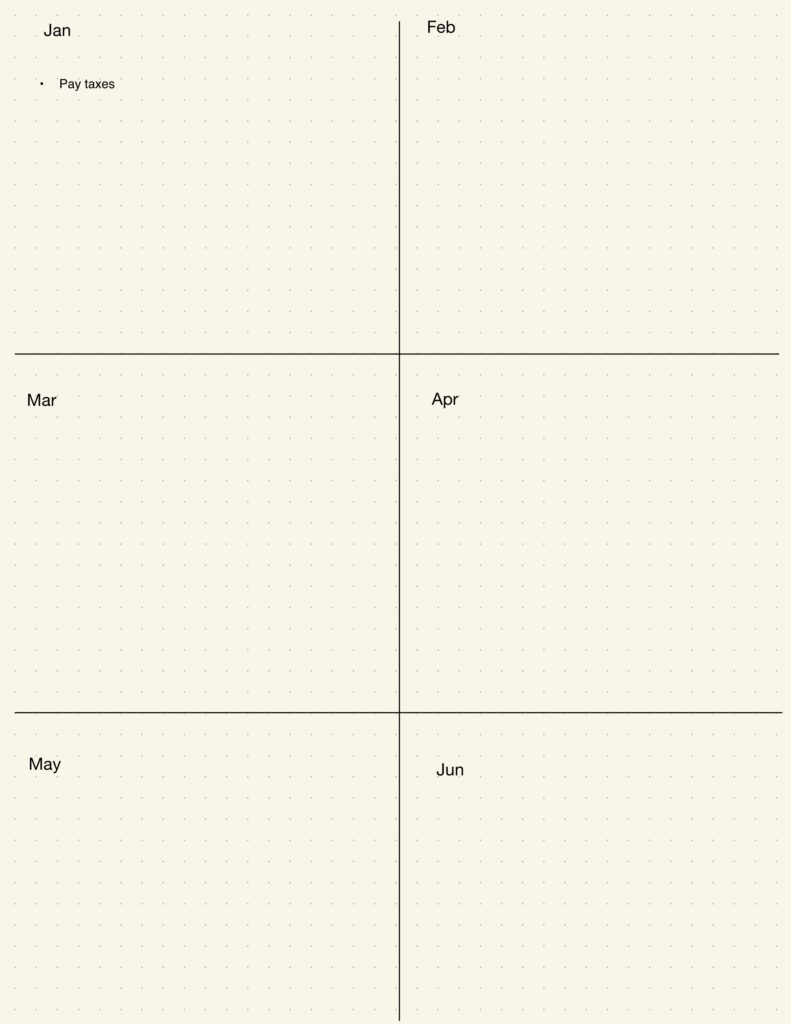
Next, I create a page for my long, medium, and short-term goals (five-year, one-year, and three-month intervals). By ‘goals,’ I mean both professional and personal objectives. At the end of each three-month period, I perform a review to track my progress.
I also dedicate a page to the books I want to read during the year. Since I usually buy more books than I can actually finish, I list them all here. When I buy new books throughout the year, I simply add them to this collection.
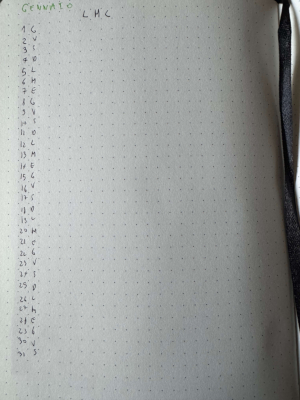
Every month, I set up a monthly calendar using one row per day. In these rows, I write down my scheduled tasks and deadlines. I also include columns for my habit tracker—in my case, three: Reading, Meditation, and Walking. I check these off day by day. Once the month has passed, I take some time to reflect on what went well and what didn’t.
Below is an example of my January page (this is my actual journal, so it’s in Italian):
I treat each week as a one-week sprint. I usually spend Sunday night setting my objectives and reviewing the backlog of things to do.
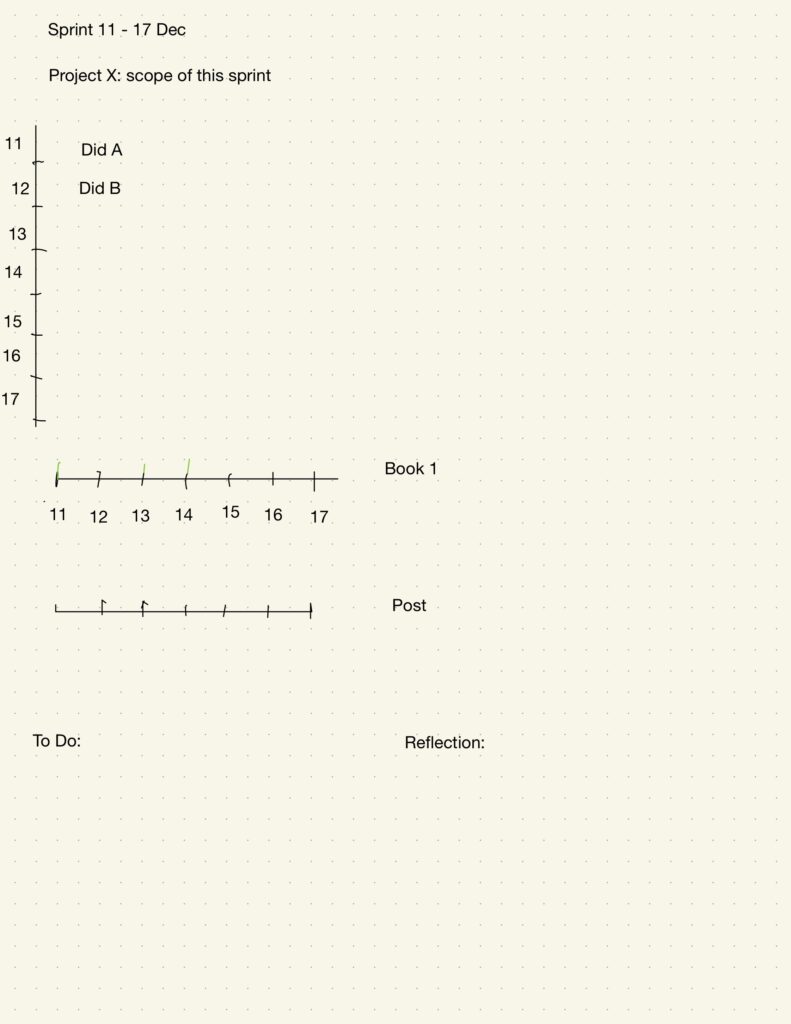
I set a specific goal for each sprint. To track the main task, I draw a vertical line divided into seven segments (one for each day). At the end of the day, I log what I accomplished in the corresponding segment.
I also draw a similar line for every project, course, or book I plan to work on during the week. These are also divided into seven segments. If I make progress on a given day, I mark it with a line or a dot. This gives me a clear visual of my consistency.
At the end of the week, before planning the next sprint, I write a short reflection on the previous seven days.
Regarding the daily layout, I divide the page vertically. On the right, I write my to-do list, marking the most important tasks with an asterisk (*). On the left, I draw a vertical line where I allocate time blocks for those activities. This helps me stay realistic about what I can actually accomplish and forces me to remove tasks that simply won’t fit into the day.
Here is how my daily page looks in practice (the time blocks on the left):
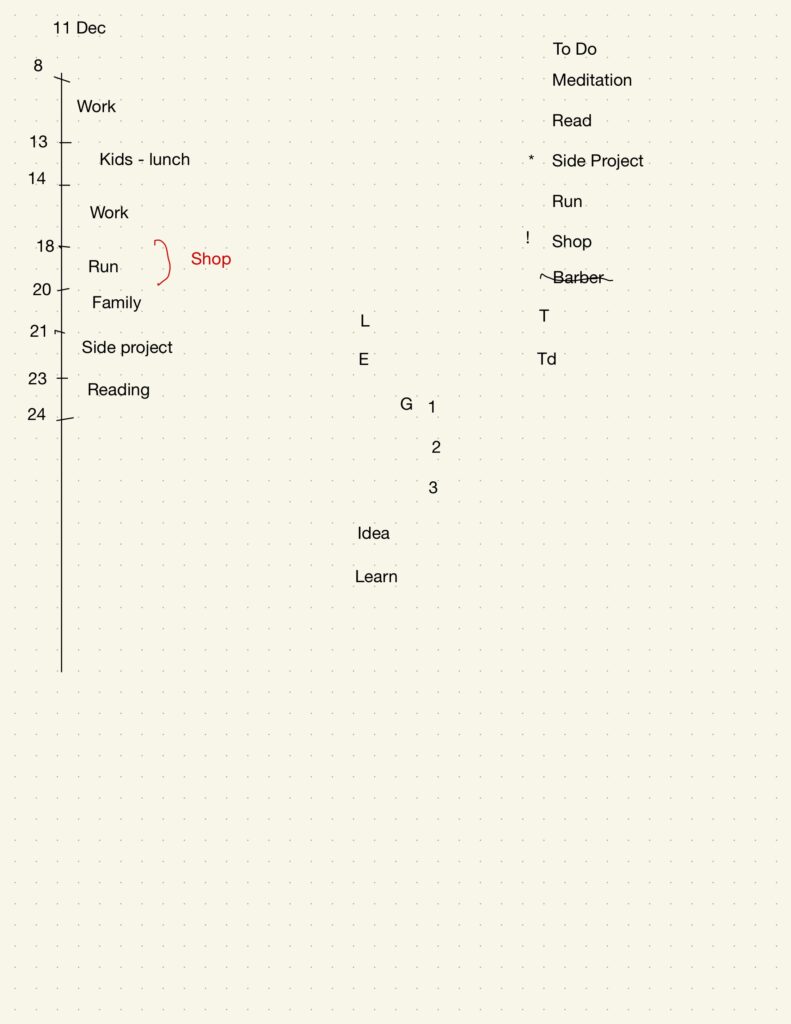
At the end of each day, I fill out several specific sections in my journal:
- Gratitude (G): I list three things I am grateful for.
- Idea of the Day (Id): A space to note the most important insight I had.
- What I Learned (Im): Reflections on new knowledge acquired.
- Today’s Tactic (T): The specific strategy I used to stay focused (e.g., ‘checking emails only twice a day’).
- Tactic for Tomorrow (Td): The strategy I plan to implement for the following day.
- Focus Level (L – Laser): My level of focus on the main task, rated from 0 to 10.
- Energy Level (E): My energy level during the main task, also on a scale of 0 to 10.
- Status: A broader reflection on the day—how things are going and the reasons behind my mood.
Since life is never monotonous, I have a system for unexpected disruptions. When something breaks my plan, I use a red pen to mark how I actually spent that time block. In the to-do list, I also add unforeseen events marked with an exclamation point (!).
This year, I am also incorporating ‘note-processing’ time into my schedule. I often accumulate browser links and quick notes that I never revisit. My goal is to review these at the end of each day: taking notes on what’s valuable and discarding the rest. I only save items that are truly useful and difficult to find again. My ultimate aim is to ‘clear’ my daily notes by moving information to its permanent home if it’s helpful, or deleting it if it isn’t.
In summary, my recipe for productivity is a combination of Journaling, Make Time techniques, and maintaining a ‘Second Brain.‘
Books and Tools:
For the note i moved during the last year to https://obsidian.md/
I wish you the best.