After more than 70 posts on SwiftUI, I decided to create a blog dedicated exclusively to SwiftUI (https://www.swiftui.blog) organized with a learning path from the easiest topics to the most complex ones. Here, I will continue writing about various subjects. I am not just SwiftUI—both for work and personal projects, I deal with different technologies, and I prefer my personal blog to reflect that.
SwiftUI
SwiftUI Chat App update
In this post, I’m writing a new version of the old posts about a chat GUI built with SwiftUI. I’ve removed the deprecated APIs and used the new ones released with iOS 18.
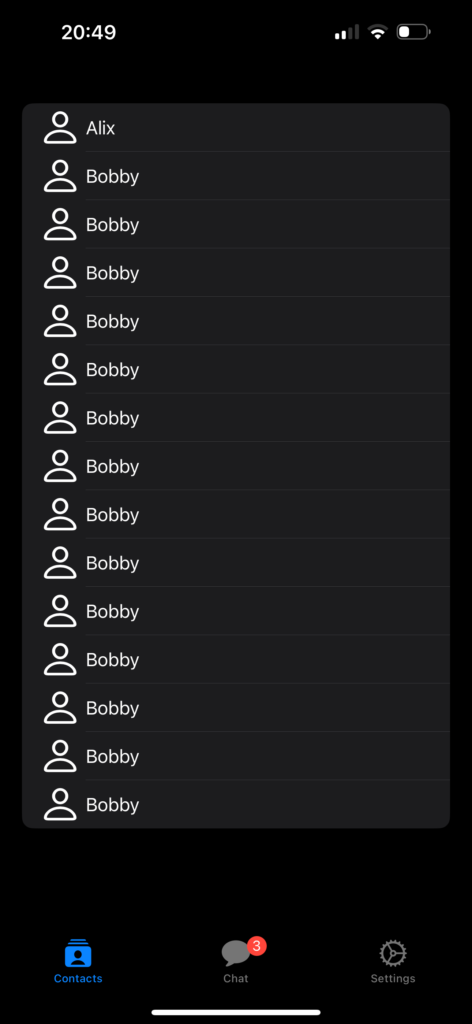
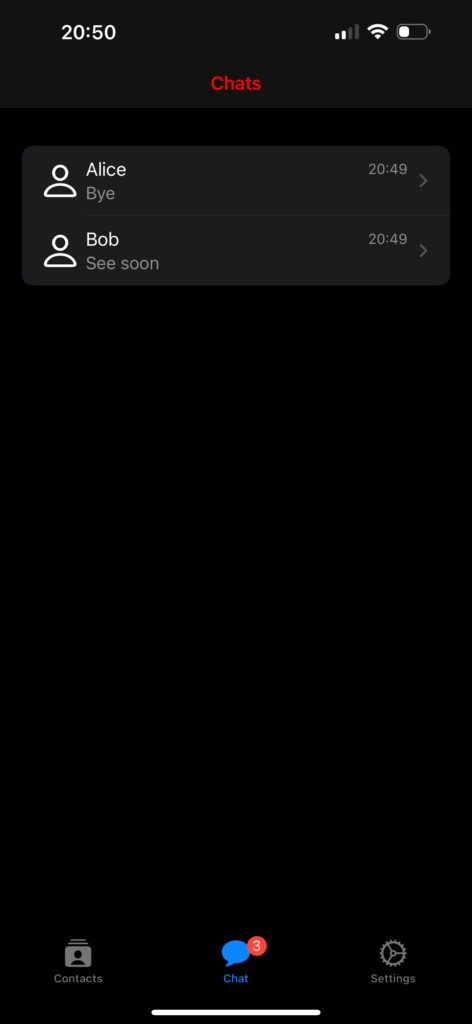
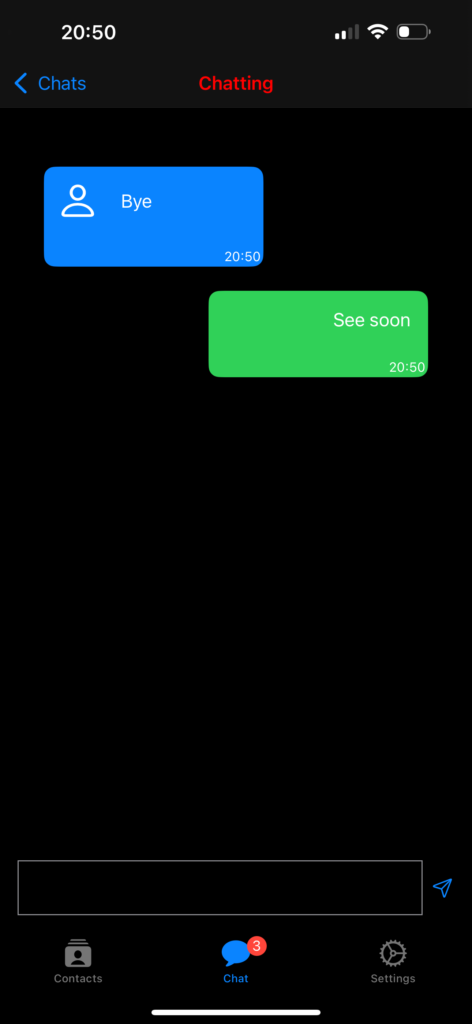
We are creating these screens: a list of contacts, a list of chats, and a chat screen. Note the red notification number on the chats tab.
The contacts
struct ContentView: View {
    init () {
        let navBarAppearance = UINavigationBarAppearance()
        navBarAppearance.titleTextAttributes = [.foregroundColor: UIColor.red]
        navBarAppearance.largeTitleTextAttributes = [.foregroundColor: UIColor.red]
        UINavigationBar.appearance().backgroundColor = .black
        UINavigationBar.appearance().standardAppearance = navBarAppearance
        UINavigationBar.appearance().compactAppearance = navBarAppearance
        UINavigationBar.appearance().scrollEdgeAppearance = navBarAppearance
        UINavigationBar.appearance().tintColor = UIColor.red
    }

    var body: some View {
        TabView {
            Tab("Contacts", systemImage: "rectangle.stack.person.crop.fill") {
                NavigationStack {
                    ContactsView()
                        .navigationBarTitle("Contacts", displayMode: .inline)
                }
            }
            Tab("Chat", systemImage: "message.fill") {
                NavigationStack {
                    ChatsView()
                }
            }.badge(3)
            Tab("Settings", systemImage: "gear") {
                SettingsView()
            }
        }
    }
}
In the init, we initialize the background and foreground colors for the tab bar and navigation.
The body contains a neat way to define the TabView (refer here for more details https://nicoladefilippo.com/tabview-in-ios-18-and-xcode-16/). The Chat tab uses the badge property to display the red number, as shown in the example.
Chats Vew
struct ChatsView: View {
    var chats: Array<Chat> = [Chat(name: "Alice", image: "person", lastMessage: "Bye", timestamp: Date(), chatId: "1"), Chat(name: "Bob", image: "person", lastMessage: "See soon", timestamp: Date(), chatId: "2")
    ]

    init () {
        let navBarAppearance = UINavigationBarAppearance()
        navBarAppearance.titleTextAttributes = [.foregroundColor: UIColor.red]
        navBarAppearance.largeTitleTextAttributes = [.foregroundColor: UIColor.red]
        UINavigationBar.appearance().backgroundColor = .black
        UINavigationBar.appearance().standardAppearance = navBarAppearance
        UINavigationBar.appearance().compactAppearance = navBarAppearance
        UINavigationBar.appearance().scrollEdgeAppearance = navBarAppearance
        UINavigationBar.appearance().tintColor = UIColor.red
    }

    var body: some View {
        VStack{
            NavigationStack {
                List {
                    ForEach(chats) { chat in
                        NavigationLink(destination: ChattingView()){
                            HStack {
                                Image(systemName: "person")
                                .resizable()
                                .frame(width: 30, height: 30)
                                VStack(alignment: .leading) {
                                    HStack {
                                        Text(chat.name)
                                        Spacer()
                                        Text(timeFormat(date: chat.timestamp))
                                        .foregroundStyle(.gray)
                                        .font(.footnote)
                                    }
                                    Text(chat.lastMessage)
                                    .foregroundStyle(.gray)
                                    .font(.callout)
                                }
                            }
                        }
                    }
                }.scrollContentBackground(.hidden).background(Color.black)
            }
        }.frame(maxWidth: .infinity, maxHeight: .infinity)
        .background(Color.black)
        .navigationBarTitle("Chats", displayMode: .inline)
    }
}
In this view, we define an array of contacts that we display using a List and ForEach, where each row contains an image, the contact’s name, and the last chat time.
With .scrollContentBackground(.hidden).background(Color.black), we set the List background to black.
The VStack that contains everything has the background also set to black, ensuring the entire screen is black, even when the list doesn’t fill the entire screen.
Chat View
struct ChattingView: View {
    @State var chats: Array<Chat> =
    [Chat(name: "Alice", image: "person", lastMessage: "Bye", timestamp: Date(), chatId: "1"),
     Chat(name: "Bob", image: "person", lastMessage: "See soon", timestamp: Date(), chatId: "2")
    ]

    @State var writing: String = ""
    init () {
        let navBarAppearance = UINavigationBarAppearance()
        navBarAppearance.titleTextAttributes = [.foregroundColor: UIColor.red]
        navBarAppearance.largeTitleTextAttributes = [.foregroundColor: UIColor.red]
        UINavigationBar.appearance().backgroundColor = .black
        UINavigationBar.appearance().standardAppearance = navBarAppearance
        UINavigationBar.appearance().compactAppearance = navBarAppearance
        UINavigationBar.appearance().scrollEdgeAppearance = navBarAppearance
        UINavigationBar.appearance().tintColor = UIColor.red
    }

    var body: some View {
        VStack(spacing: 0) {
            // Chat
            Spacer()
            List {
                ForEach(chats) { chat in
                    if chat.name == "Bob" {
                        UserRowView(chat: chat)

                    } else {
                        ChatRowView(chat: chat)
                    }
                }.listRowBackground(Color.clear)
                .listRowSeparator(.hidden)
            }.scrollContentBackground(.hidden)
            .navigationBarTitle("Chatting", displayMode: .inline)
            .onTapGesture {
                self.endEditing()
            }
            // Input
            HStack() {
                TextEditor(text: $writing)
                    .frame(minHeight: 0, maxHeight: 50)
                    .border(Color.gray)

                Button(action: {
                    chats.append(Chat(name: "Bob", image:"", lastMessage: writing, timestamp: Date(), chatId: ""))
                    writing = ""
                    self.endEditing()
                }) {
                    Image(systemName: "paperplane")
                }

            }.ignoresSafeArea(.keyboard, edges: .bottom)
            .padding()
        }.background(Color.black)
    }

    private func endEditing() {
    UIApplication.shared.sendAction(#selector(UIResponder.resignFirstResponder), to:nil, from:nil, for:nil)
    }
}
This view also contains the settings for the tab bar and navigation. For the list of chats, we hide the scroll indicator and the row separator. We have two types of rows: one for the user (Bob) and the other to show messages from other people. We’ll take a closer look at that below. Now, please pay attention to the endEditing function; it’s called to hide the keyboard when the message is sent or when we want to stop typing.
Take a look at the rows:
struct ChatRowView: View {
    var chat: Chat
    var body: some View {
        VStack (alignment: .trailing){
            HStack() {
                Image(systemName: chat.image)
                    .resizable()
                    .frame(width: 30, height: 30)
                    .padding()
                Text(chat.lastMessage)
                Spacer()
            }.frame(maxWidth: 200)
            Text(timeFormat(date: chat.timestamp))
                .padding(2)
                .font(.caption)
                .foregroundStyle(.white)
        }.background(Color.blue)
        .clipShape(RoundedRectangle(cornerRadius: 10))
    }
}

struct UserRowView: View {
    var chat: Chat
    var body: some View {
        HStack {
            Spacer()
            VStack (alignment: .trailing){
                HStack() {
                    Spacer()
                    HStack {
                        Spacer()
                        Text(chat.lastMessage)
                            .padding()
                    }
                }
                Text(timeFormat(date: chat.timestamp))
                    .padding(2)
                    .font(.caption)
                    .foregroundStyle(.white)
            }.background(Color.green)
            .frame(minWidth: 10, maxWidth: 200)
            .clipShape(RoundedRectangle(cornerRadius: 10))
        }
    }
}

func timeFormat(date: Date) -> String {
    let formatter = DateFormatter()
    formatter.dateFormat = "HH:mm"
    return formatter.string(from: date)
}
The rows don’t have anything special apart from the alignment, but they use a new API to create rounded corners. Instead of using the deprecated cornerRadius, we utilize clipShape with a RoundedRectangle that has a corner radius.
You can find the comple code here: https://github.com/niqt/EEnigma/tree/main
Splash screen in SwiftUI
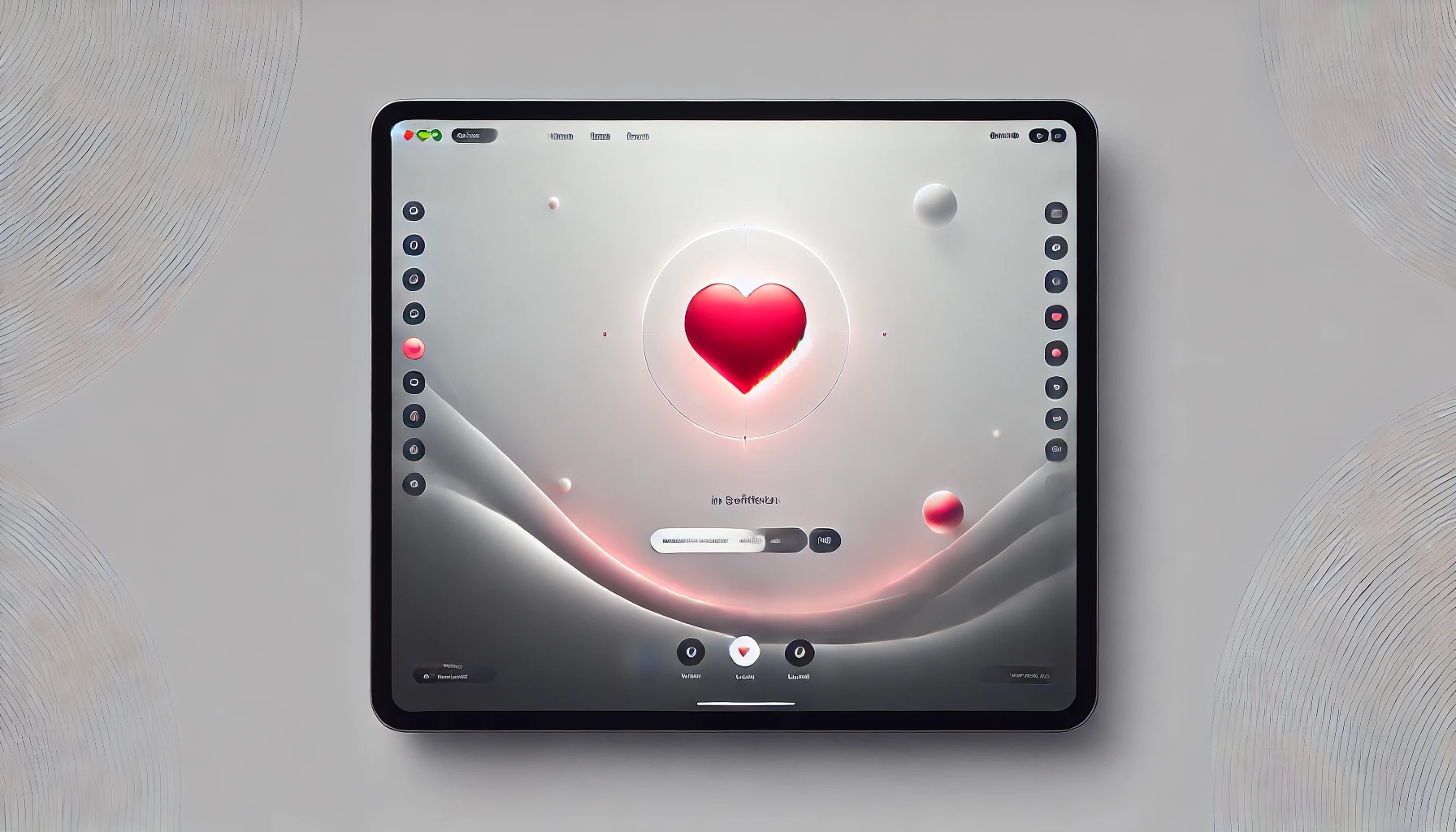
In this post, we’ll see an object that is present in many popular applications: the Splash Screen. With the storyboard, we have a specific object for that. In SwiftUI, the splash screen is a regular view that we can create however we want. In the example, the splash screen contains a heart that pulses for two seconds.
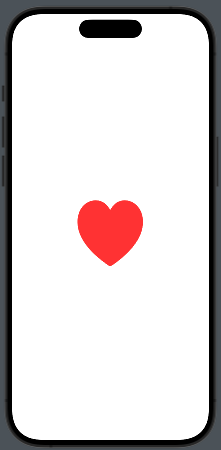
Take a look at the code:
struct SplashView: View {
    @State private var isAnimating = false
    var body: some View {
        VStack {
            Image(systemName: "heart.fill")
                .resizable()
                .frame(width: 100, height: 100)
                .foregroundColor(.red)
                .scaleEffect(isAnimating ? 1.5 : 1.0)
        }.onAppear {
            withAnimation(.easeInOut(duration: 1.0).repeatForever)) {
                isAnimating = true
            }
        }
    }
}
We have a variable used to start the animation (isAnimating). The image, a red heart, initially has dimensions of 100×100, but scales to 1.5 times its size. The animation lasts 1 second and loops indefinitely.
How do we display this view when the application starts? We have two possibilities:
- Create a coordinator view that contains the logic to decide what to display when the application starts.
- Add the logic mentioned in the previous point directly in the …App file.
The first solution may be the cleaner approach, but I also want to show how to modify the App file:
import SwiftUI

@main
struct SplashAppApp: App {
    @State var starting = true
    var body: some Scene {
        WindowGroup {
            if starting {
                SplashView()
                    .onAppear {
                        Task {
                            try await Task.sleep(nanoseconds: 2_000_000_000)
                            starting = false
                        }
                    }
            } else {
                ContentView()
            }
        }
    }
}
A starting variable is used to check if the application has already started or not. If the application is starting, the SplashView is displayed, and a task is initiated to wait for two seconds. After this time, the starting variable is toggled, and the main view of the application is displayed.
Implementing Temporary Row Highlighting how in iOS Settings with SwiftUI

If you are an iOS user and have ever tried to search for a feature in the settings by typing the name in the search bar, you might have noticed that when you jump to the page with the found feature, the row with the feature is highlighted for a few seconds. In this post, I’ll show a possible implementation for that.
First we create a page with a simple navigation link to jump to the page that contains the feature (in our case VPN).
struct ContentView: View {
    var body: some View {
        NavigationStack {
            NavigationLink("Settings", destination: ListWithHighlightView(search: "VPN"))
        }
    }
}
Then define the struct option, with simple an id, name, and hi (it’s true if need to be higligthed).
struct Option: Identifiable {
    var id = UUID()
    var hi = false
    var name = ""
}
In the View we create a simple array with some options, show the list of options. When the list is displayed (the onAppear), simply check the name of the item to higlight, if it found, we higlight, than calling in the task a timer for one second, we remove the highligting.
struct ListWithHighlightView: View {
    @State var options = [Option(name: "Wi-fi"), Option( name:"VPN"), Option(name: "Sound")]
    @State var search = ""
    var body: some View {
        VStack {
            List {
                ForEach(0..<options.count) { index in
                    Text(options[index].name)
                    .listRowBackground(Color(options[index].hi ? UIColor.systemFill : UIColor.systemBackground))
                    .onAppear {
                        if search == options[index].name {
                            options[index].hi = true
                            Task {
                                try await Task.sleep(nanoseconds: 1_000_000_000)
                                options[index].hi = false
                            }
                        }
                    }
                }
            }
        }
    }
}
The listRowBackground define the background of the row, that in this case contains only a text.
Note: English is not my native language, so I apologize for any errors. I use AI solely to generate the banner of the post; the content is human-generated.
Share SwiftData with a Widget

In this post, we’ll see how to share data from the application to the widget.
First, create the project and call it SharedWidget, selecting SwiftData as storage. After that, create the widget by selecting Target in the File -> New menu and then WidgetExtension.
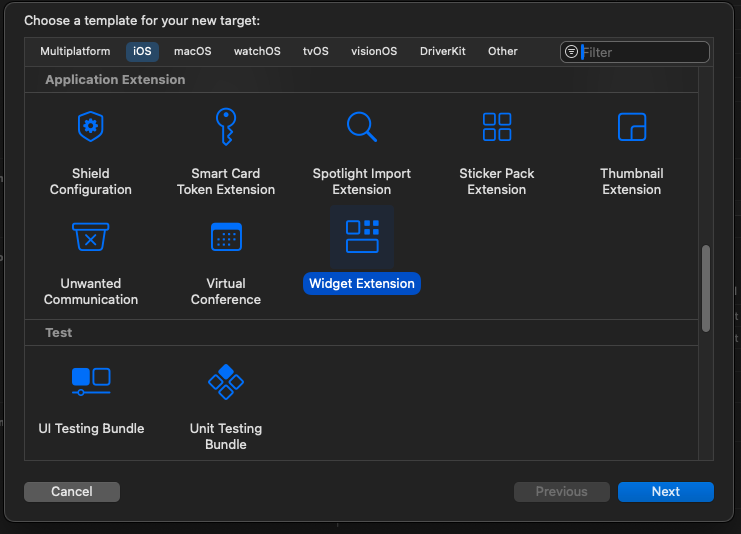
After the creation process, you can also deselect the Live and Intent options because we won’t be using them.
To share data between the application and the widget, we need to create an App Group in the capabilities. After that, add a group and call it whatever you want. In my case, I named it:

Then, select the widget extension in the target:
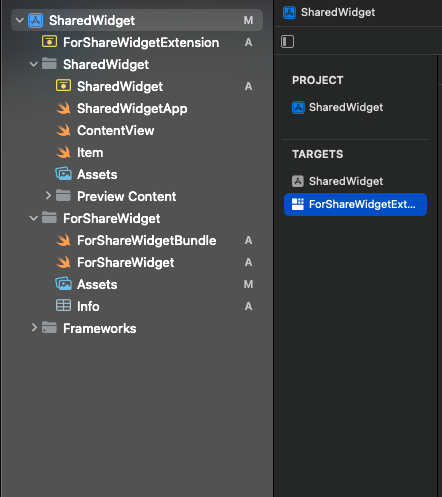
Thus, also for it, add the app group in the capabilities, but this time don’t add a new one; select the existing one.
One last thing before we look at the code. We have to share the model between the app and the widget, so select the Item.swift file and select both project components:
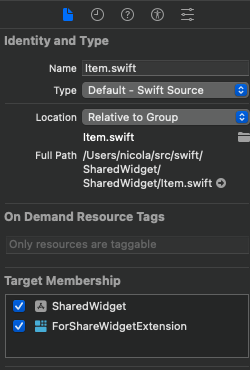
If you run the application at this moment, you can add an item (the default Apple example for SwiftData) and if you add the widget, you’ll see a time and an emoji. We want to simply display the number of items added below the emoji, so the first thing to do is:
struct SimpleEntry: TimelineEntry {
    let date: Date
    let emoji: String
    let number: Int
}
Where the TimeLineEntry is: “A type that specifies the date to display a widget, and, optionally, indicates the current relevance of the widget’s content.”
Now, in the provider, we add the structure to retrieve the item numbers:
@MainActor
    private func getNumberOfItems() -> Int {
        guard let modelContainer = try? ModelContainer(for: Item.self) else {
            return 0
        }
        let descriptor = FetchDescriptor<Item>()
        let number = try? modelContainer.mainContext.fetch(descriptor).count
        return number ?? 0
    }
Note the @MainActor, now we change the Provider in this way:
struct Provider: TimelineProvider {

    @MainActor
    func placeholder(in context: Context) -> SimpleEntry {
        SimpleEntry(date: Date(), emoji: "😀", number: getNumberOfItems())
    }

    @MainActor
    func getSnapshot(in context: Context, completion: @escaping (SimpleEntry) -> ()) {
        let entry = SimpleEntry(date: Date(), emoji: "😀", number: getNumberOfItems())
        completion(entry)
    }

    @MainActor
    func getTimeline(in context: Context, completion: @escaping (Timeline<Entry>) -> ()) {
        print(Date())
        let timeline = Timeline(entries: [SimpleEntry(date: Date(), emoji: "😀", number: getNumberOfItems())], policy: .after(.now.advanced(by: 60)))
        completion(timeline)
    }

    @MainActor
    private func getNumberOfItems() -> Int {
        guard let modelContainer = try? ModelContainer(for: Item.self) else {
            return 0
        }
        let descriptor = FetchDescriptor<Item>()
        let number = try? modelContainer.mainContext.fetch(descriptor).count
        return number ?? 0
    }
}
So, every function that uses the getNumberOfItems must use the @MainActor annotation (Its role is to ensure that all code is executed on the main thread).
For more information about timelines, I advise reading the official documentation: Apple Developer – Timeline.
Now do a little changes in the view:
struct ForShareWidgetEntryView : View {
    var entry: Provider.Entry

    var body: some View {
        VStack {
            Text("Time:")
            Text(entry.date, style: .time)

            Text("Emoji:")
            Text(entry.emoji)
            Text("\(entry.number)")
        }
    }
}
Now everything should work. Keep in mind that in a production environment, the operating system decides when to update the widget.