From September 2021 is finally available native SwiftUI SearchBar component, so is not anymore necessary to attach UIKit things to have the search bar in a SwiftUI application, but there is a condition, can be restrictive for someone, to use iOS 15.
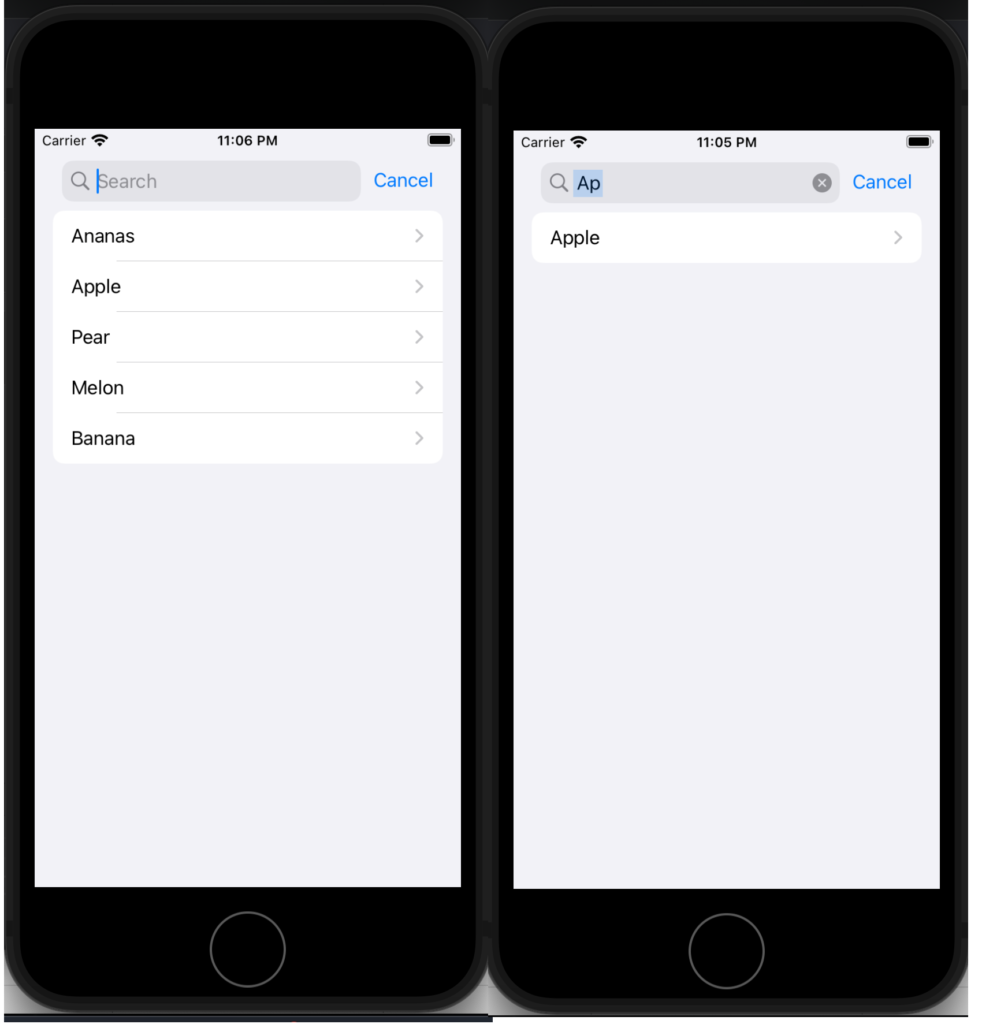
First look at a simple example, use the searchbar to search a string in a list of fruit.
struct SimpleSearchUIView: View {
    let names = ["Ananas", "Apple", "Pear", "Melon", "Banana"]
    @State private var searchText = ""

    var body: some View {
        NavigationView {
            List {
                ForEach(searchResults, id: \.self) { name in
                    NavigationLink(destination: Text(name)) {
                        Text(name)
                    }
                }
            }
            .searchable(text: $searchText)
            .navigationTitle("Fruits")
        }
    }

    var searchResults: [String] {
        if searchText.isEmpty {
            return names
        } else {
            return names.filter {$0.lowercased().contains(searchText.lowercased())}
        }
    }
}
First thing, add a searchable to a List. The searchable is waiting for a text, and the written text is saved in a state variable, in this case, searchText.
The ForEach is not working on a list but with a variable that contains the fruits filtered using the search text. Simply it applies a filter on the names array.
Now see an example using an array of complex type, simply Post type, so defined:
struct Post: Identifiable, Hashable {
    var id = UUID()
    var title: String
    var image: String
}
Now the List and the searchbar working in this way:
struct SerarchUIView: View {
    @State private var searchText = ""
    var posts = [
        Post(title: "Toolbar and Customization", author: "Nicola De Filippo"),
        Post(title: "SwiftUI App Chat – Episode II°", author: "Nicola De Filippo"),
        Post(title: "SwiftUI App Chat – Episode I°", author: "Nicola De Filippo"),
        Post(title: "Navigation", author: "NDF"),
        Post(title: "SwiftUI App Chat – Episode II°", author: "Nicola De Filippo"),
        Post(title: "List in SwiftUI", author: "NDF"),
        Post(title: "State, Binding and Refactoring", author: "Nicola De Filippo")

    ]
    var body: some View {
        NavigationView {
            List(searchResults) { post in
                VStack(alignment: .leading) {
                    Text(post.title)
                        .font(.headline)
                    Text(post.author)
                        .font(.caption)
                }
            }.searchable(text: $searchText)
            .navigationBarTitle("My posts", displayMode: .automatic)
        }
    }

    var searchResults: [Post] {
        if searchText.isEmpty {
            return posts
        } else {
            return posts.filter { (post: Post) in
                return post.title.lowercased().contains(searchText.lowercased())
            }
        }
    }
}
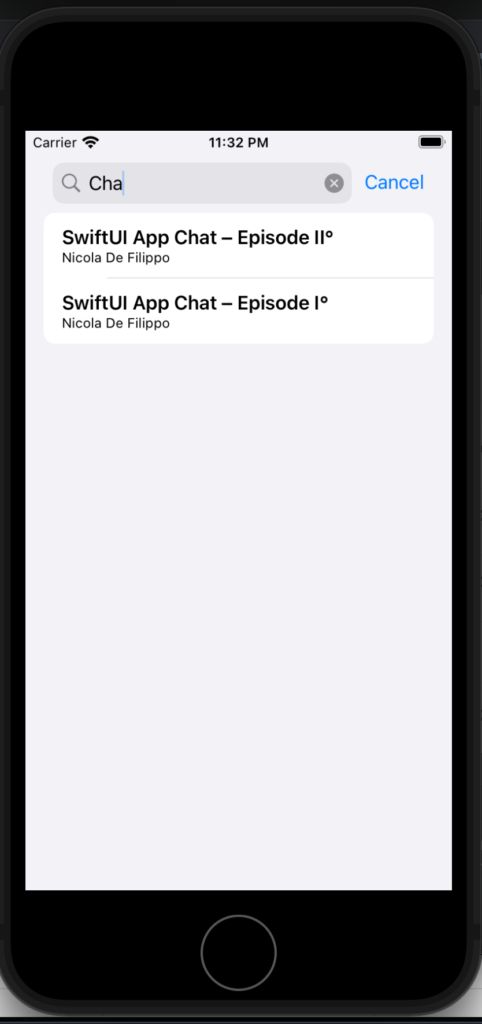
Now the list iterates on a list of posts, the searchable works with a text, instead of the search result in this case filter the array using the title. If everything is ok, you should have:
Note: English is not my native language, so I’m sorry for some errors. I appreciate it if your correct me.
First thing, create a UINavigationBarAppearance and clear any default options, then we set the background colour and the text colour. Note that for the text colour we need to specify the colour for when the title is little or large.
We set the appearance to the navigation bar for any possible case.
The last two lines are about the settings of the TabBar.
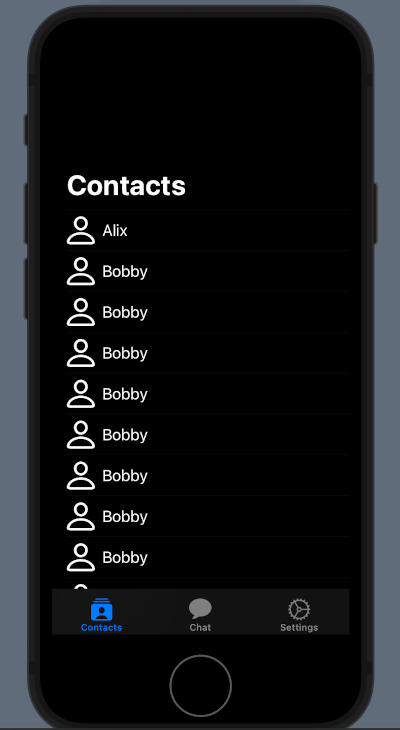
To complete the customization of the contacts list we need to do some changes in the ContactsView:
 init() {
        UITableView.appearance().backgroundColor = .none
        UITableViewCell.appearance().backgroundColor = .none
    }

    var body: some View {
        List {
            ForEach(contacts) { contact in
                ZStack(alignment: .leading) {
                    RowView(contact: contact)
                    NavigationLink(destination: ChattingView()) {
                        EmptyView()
                    }.buttonStyle(PlainButtonStyle()).frame(width:0).opacity(0)
                }
            }.listRowBackground(Color.clear)
        }.background(Color.black)
        .ignoresSafeArea()
    }
}

struct RowView: View {
    var contact: Contact
    var body: some View {
        HStack {
            Image(systemName: "person")
                .resizable()
                .frame(width: 30, height: 30)
                .foregroundColor(.white)
            Text(contact.aliasName)
                .foregroundColor(.white)
        }
    }
}
In the init function we remove the background to the tableview and to the cells present in the view.
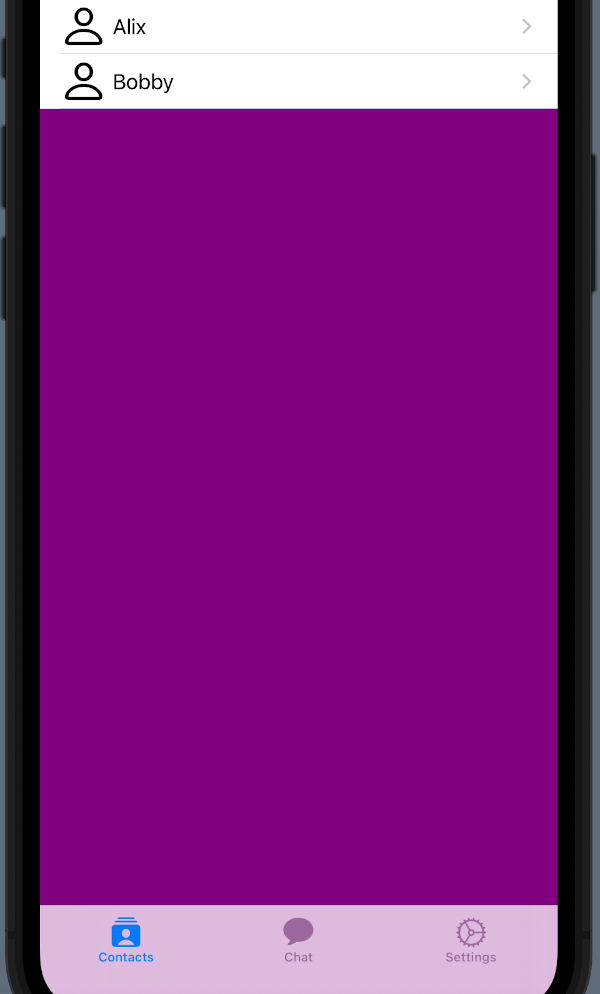
Note how with the .listRowBackground(Color.clear) remove the background to the rows and how we set the list background to the list with .background(Color.black).
Why do we need a ZStack to show the rows of the list?
In SwuiftUI we don’t have a simple method to remove the Disclosure indicator (> at the end of the row). To hide this indicator, we overlap the Row with a NavigationLink that have EmptyView (so we can see the RowView) and a buttonStyle with zero width.
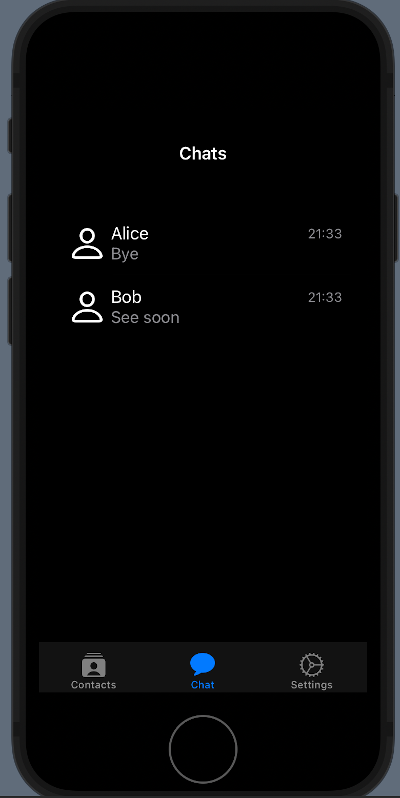
Chats List
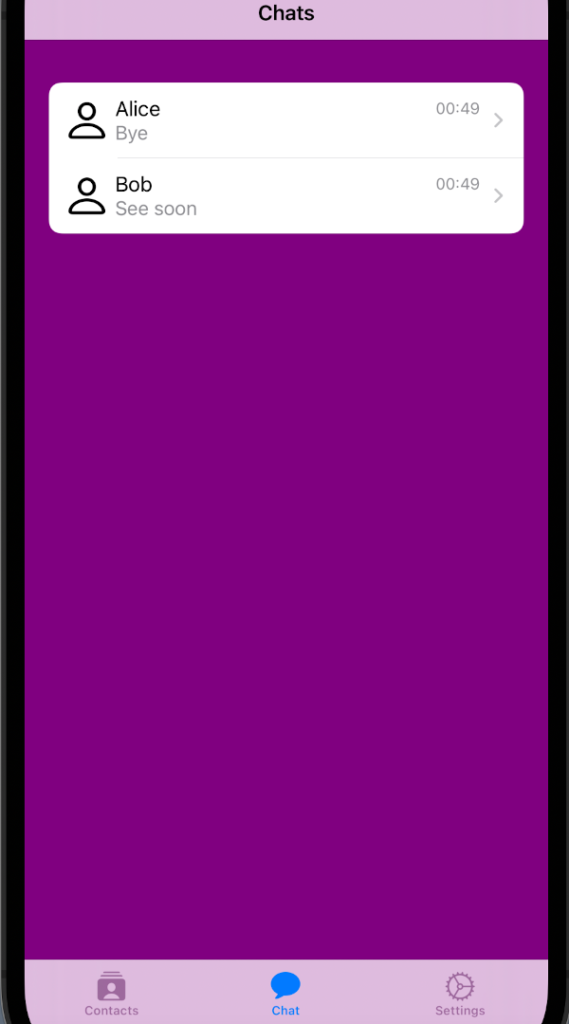
We want:
First, remove the background in the init function:
With this post starts a series where the topic is building a chat app using the Smoke protocol, as in every my post I want to share knowledge about SwiftUI, so in this series also who doesn’t have an interest in a chat app can read/learn things helpful also for other types of project.
In memory
Before to start, i want to say that: “This Chat App EEnigma stands for Electronic Enigma. It is a project based on the Echo protocol as e.g. deployed in the Smoke mobile Messenger Application for Android, which is known as as worldwide the first mobile McEliece Messenger. I started this project in memory of my friend Bernd H. Stramm, who passed away two years ago and was also a friend of the inventor of the Echo Protocol, e.g. for secure chat. The aim is to provide students a step by step guide and open source code basis to develop an own chat application with the Swift programming language.”
The three views ContactsView, ChatView and SettingsView don’t exist yet. Note the NavigationView in the first tab, the ContactsVIew is within a NavigationView (with no title), I do it because I want ( when I tap a contact) to open a view to chat.
See the ContactView:
struct ContactsView: View {
    var contacts: Array<Contact> = [Contact(name: "Alice", lastName: "Fish", aliasName: "Alix"),
        Contact(name: "Bob", lastName: "Bird", aliasName: "Bobby")
    ]

    var body: some View {
        List {
            ForEach(contacts) { contact in
                NavigationLink(destination: ChattingView(), label: {
                    RowView(contact: contact)
                })
            }
        }
    }
}

struct RowView: View {
    var contact: Contact
    var body: some View {
        HStack {
            Image(systemName: "person")
                .resizable()
                .frame(width: 30, height: 30)
            Text(contact.aliasName)
        }
    }
}
I defined a Contact in this way:
struct Contact: Identifiable {
    var id = UUID()
    var name: String
    var lastName: String
    var aliasName: String
}
Chatting
The ContactsView is defined as an array of fake contacts and in the List, we iterate this array and show (using the RowView) the default image “person” and the alias of the contact. Note as there is a NavigationLink that contains the RowView. If we tab the row the view change in the destination ChattingView.
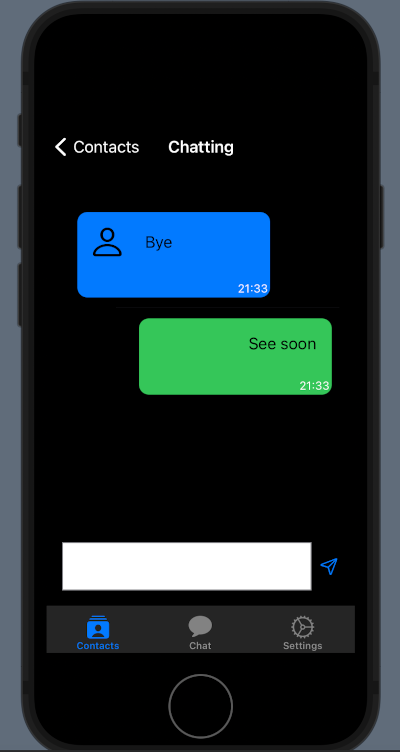
How in all the chat app, on the left we have the messages received and on the right the messages sent.
At the bottom, there are TextEdit and a button to write and send a message. We want to close the keyboard when tapping the send button or tap in any place on the view. See all piece by piece.
struct Chat: Identifiable {
    var id = UUID()
    var name: String
    var image: String
    var lastMessage: String
    var timestamp: Date
    var chatId: String
}
The chat has the name of the sender, an image (we’ll remove when we’ll do refactoring), the last message sent from the “name”, and the Id of the chat and when the message has arrived.
This row so has a VStack aligned on the left, within an HStack with a fixed maximum width, we don’t want a rectangle that fills all the width. In this stack, we add at the end a Spacer to force the alignment on the left. Note instead of the alignment of the stack on the right, it’s necessary to have the time on the right.
It’s very similar to the “blue”. In this case, there is no image, because this message is of the user and in the HStack the Spacer is at the beginning because we want to align the text on the right.
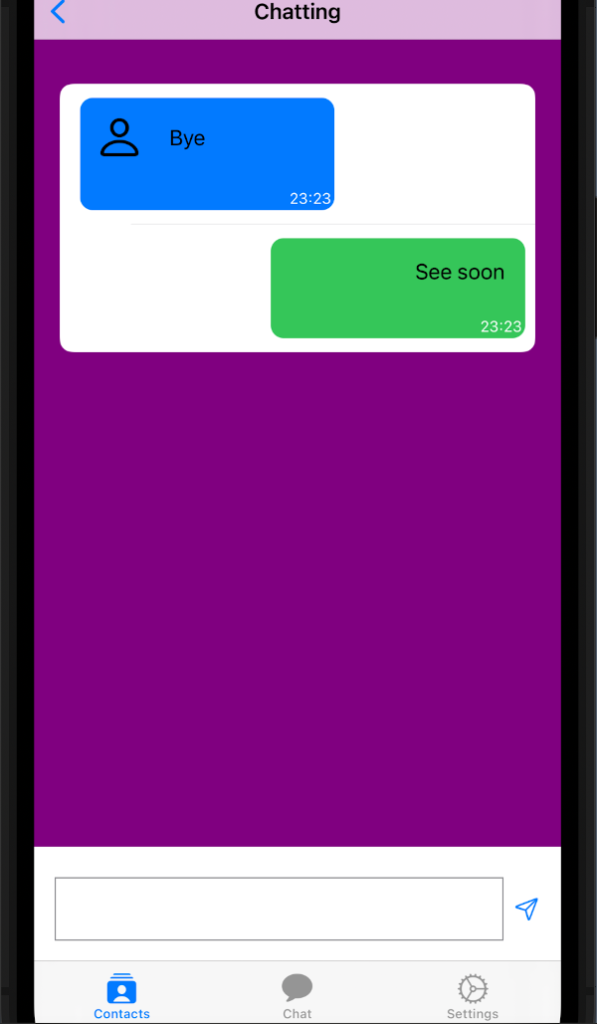
In the init, I set the background colour to purple.
With the function endEditing, we dismiss the keyboard, this function is called when the user taps the send button or when taps anywhere on the view.
The Chat part contains a list of the messages, in the foreach, we verify if the message is of the sender or the user. To simplify in this example, I assumed that the user is Bob (in future we’ll remove any embedded value). With .listStyle(SidebarListStyle()) we remove the line separator, instead with onTapGesture we catch this gesture and close the keyboard (is open).
In the input part, we set a TextEdit in the bar on the bottom calling the .ignoresSafeArea(.keyboard, edges: .bottom), in this way the HStack is on the bottom but when appears the keyboard the Hstack is moved on top of the keyboard, so the user can see what he writes.
To default (for now) when simulating the send of the message, the owner is Bob, so we see the message in the green rectangle.
This piece of code has things already seen in the previous: a NavigationLink on the row and when it’s tapped the view skip to destination ChattingView.
I suggest playing with HStack, VStack, Spacer and fonts to have better effects.
How said at the beginning it’s only the first episode, in the next week, we’ll create a nice real chat app.
Note: English is not my native language, so I’m sorry for some errors. I appreciate it if your correct me.
In the previous post (https://nicoladefilippo.com/navigation-in-swiftui/) we saw how to navigate between the views in the app. In this post, we see another element to implement the navigation, the toolbar and how to customize the navigation bar.
Toolbar
First, create an empty project:
struct ContentView: View {
    var body: some View {
            Text("Hello, world!")
                .padding()
    }
}
Add the NavigationView:
struct ContentView: View {
    var body: some View {
        NavigationView {
            VStack {
                Text("Hello, world!")
                    .padding()
            }
        }
    }
}
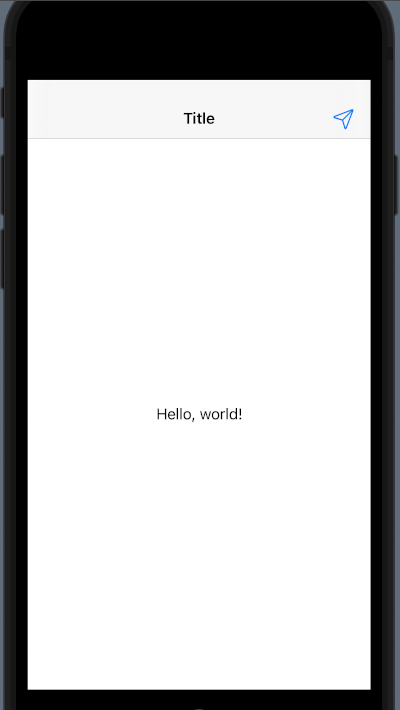
First, add a navigationTitle or a navigationBarTitle then add the toolbar. In the content you can write any object with user interaction (i.e. Button); in this example, we use a NavigationLink showing an image, paperplane, and how destination an EmptyView, for real app replace it with your view.
Customize
Start to the end:
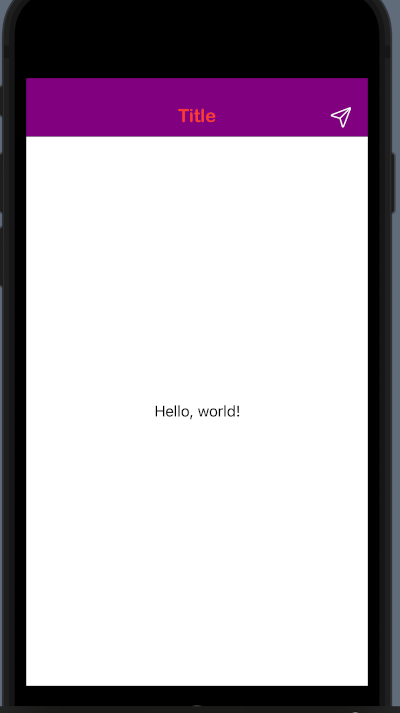
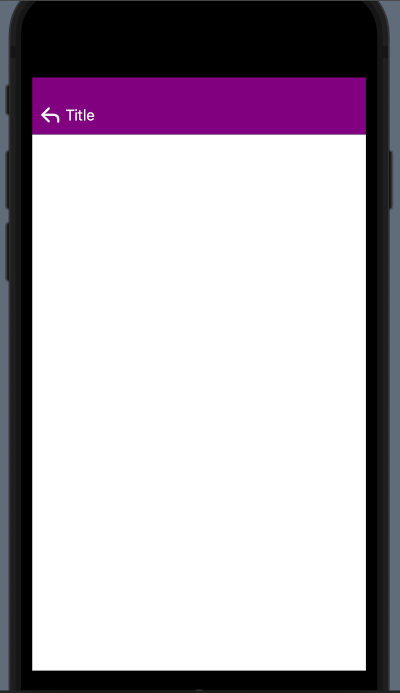
We want to have a purple navigationBar, with a custom font, and a different arrow to come back. How to do it?
We need to write an init function in the ContentView. In this function, we declare a navBarAppearance of UINavigationBarAppearance type.
For this, we define the property backgroundColor, largeTitleTextAttributes and titleTextAttributes (you can try to use different value and see the different effect).
Then we use the navBarAppearance for the standardAppearance, scrollEdgeAppearance and compactAppearance. Where:
standardAppearance is the appearance settings for a standard-height navigation bar
scrollEdgeAppearance is the appearance settings to use when the edge of any scrollable content reaches the matching edge of the navigation bar.
compactAppearance is the appearance settings for a compact-height navigation bar.
To change the image for the backIndicator use the setBackIndicatorImage, instead to change the colour of the image in the toolbar, set a value to UINavigationBar.appearance().tintColor.
To change the colour to a tabbar:
UITabBar.appearance().barTintColor = .purple
You can use the tabbar example from the previous post and work on it.
If you want, you can ask me for some arguments and I will try to satisfy you.
Note: English is not my native language, so I’m sorry for some errors. I appreciate it if your correct me.
In this post, I explain how to use the list to show a list of elements.
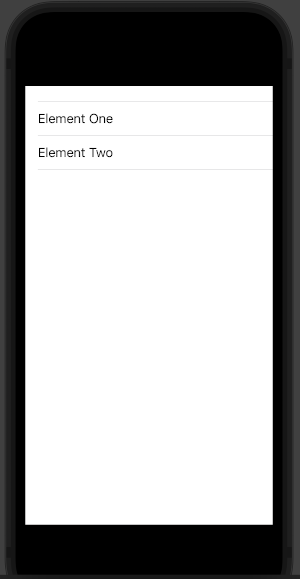
The first simple example:
struct ContentView: View {
    var body: some View {
        List  {
            Text("Element One")
            Text("Element Two")
        }
    }
}
The magic word is List, which has two text elements:
The better way to iterate a list is to use a ForEach:
struct ContentView: View {
    var body: some View {
        List  {
            ForEach(1...10, id: \.self) { index in
                Text("Element \(index)")
            }
        }
    }
}
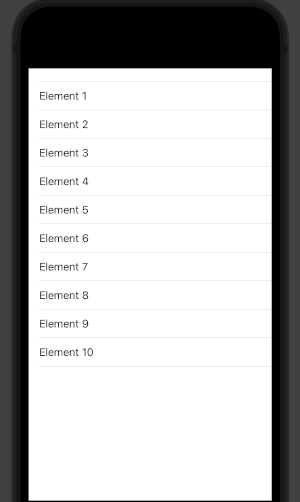
To have:
What’s is the id? What’s its purpose? The id identifies uniquely every element of the list, in this case with \.self the id is the value of the element. In the index is stored the current value of the element.
The id is very important, so we can define it for our structure using the Identifiable protocol:
struct Vehicle: Identifiable {
    var id = UUID()
    var name: String
    var image: String
}
Change the code in the example in this way:
struct ContentView: View {
    var vehicles = [Vehicle(name: "car", image: "car"),
                    Vehicle(name: "bus", image: "bus"),
                    Vehicle(name: "tram", image: "tram"),
                    Vehicle(name: "bicycle", image: "bicycle")]

    var body: some View {
        List(vehicles) { vehicle in
            Text(vehicle.name)
        }
    }
}
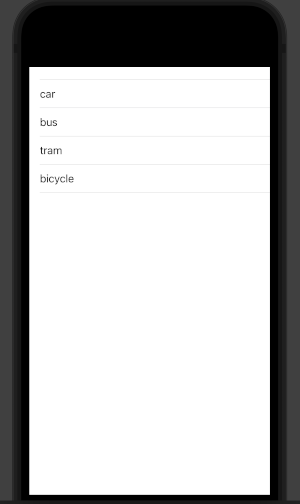
In the previous code is declared and initialized an array of Vehicle and the list iterates on that array, to have:
var body: some View {
        List(vehicles) { vehicle in
            HStack {
                Image(systemName: vehicle.image)
                Text(vehicle.name)
            }
        }
    }
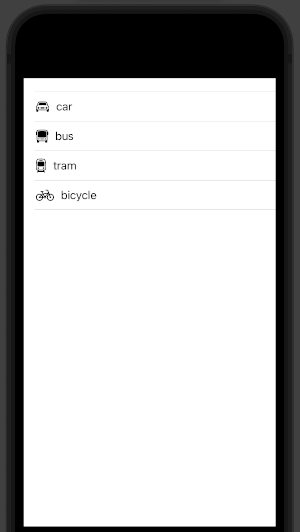
The text is not aligned, to fix it we have to do some change, set the resizable property at the image and set a fixed size for the image. Before doing that is better to extract the code that shows the row to have clean code. From the contextual menu, select show code action and then extract subview. Rename the ExtractSubview in RowView.
struct RowView: View {
    var body: some View {
        HStack {
            Image(systemName: vehicle.image)
            Text(vehicle.name)
        }
    }
}
There are some errors because the vehicle is not found, so fix it:
struct RowView: View {
    var vehicle: Vehicle
    var body: some View {
        HStack {
            Image(systemName: vehicle.image)
            Text(vehicle.name)
        }
    }
}
Now change the image properties:
struct RowView: View {
    var vehicle: Vehicle
    var body: some View {
        HStack {
            Image(systemName: vehicle.image)
                .resizable()
                .frame(width: 60, height: 60)
            Text(vehicle.name)
        }
    }
}
At the end change the code in the List:
var body: some View {
        List(vehicles) { vehicle in
            RowView(vehicle: vehicle)
        }
    }
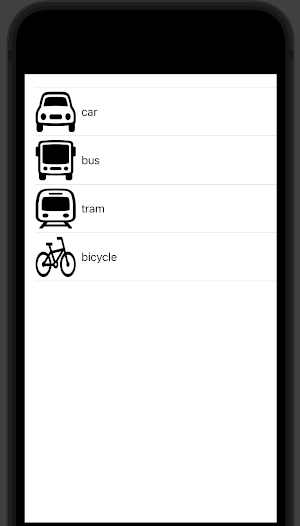
To have:
Swipe action
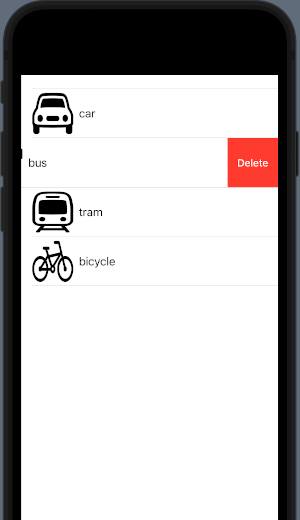
With SwiftUI is simple to implement the swipe action to delete an element:
var body: some View {
        List {
            ForEach(vehicles) { vehicle in
                RowView(vehicle: vehicle)
            }
            .onDelete { (indexSet) in
                self.vehicles.remove(atOffsets: indexSet)
            }
        }
    }
Note that we have to use the ForEach because the onDelete is defined for the ForEach and not for the List.
We have also to change the declaration of the array in:
We have to add @State because we want to propagate the change of the vehicles in the view.
The complete code is:
struct Vehicle: Identifiable {
var id = UUID()
var name: String
var image: String
}
struct ContentView: View {
@State var vehicles = [Vehicle(name: "car", image: "car"),
                    Vehicle(name: "bus", image: "bus"),
                    Vehicle(name: "tram", image: "tram"),
                    Vehicle(name: "bicycle", image: "bicycle")]
var body: some View {
List {
ForEach(vehicles) { vehicle in
RowView(vehicle: vehicle)
}
.onDelete { (indexSet) in
self.vehicles.remove(atOffsets: indexSet)
}
}
}
}
struct RowView: View {
var vehicle: Vehicle
var body: some View {
HStack {
Image(systemName: vehicle.image)
.resizable()
.frame(width: 60, height: 60)
Text(vehicle.name)
}
}
}
To have:
Note: English is not my native language, so I’m sorry for some errors. I appreciate it if your correct me.
Manage Consent
To provide the best experiences, we use technologies like cookies to store and/or access device information. Consenting to these technologies will allow us to process data such as browsing behavior or unique IDs on this site. Not consenting or withdrawing consent, may adversely affect certain features and functions.
Functional
Always active
The technical storage or access is strictly necessary for the legitimate purpose of enabling the use of a specific service explicitly requested by the subscriber or user, or for the sole purpose of carrying out the transmission of a communication over an electronic communications network.
Preferences
The technical storage or access is necessary for the legitimate purpose of storing preferences that are not requested by the subscriber or user.
Statistics
The technical storage or access that is used exclusively for statistical purposes.The technical storage or access that is used exclusively for anonymous statistical purposes. Without a subpoena, voluntary compliance on the part of your Internet Service Provider, or additional records from a third party, information stored or retrieved for this purpose alone cannot usually be used to identify you.
Marketing
The technical storage or access is required to create user profiles to send advertising, or to track the user on a website or across several websites for similar marketing purposes.